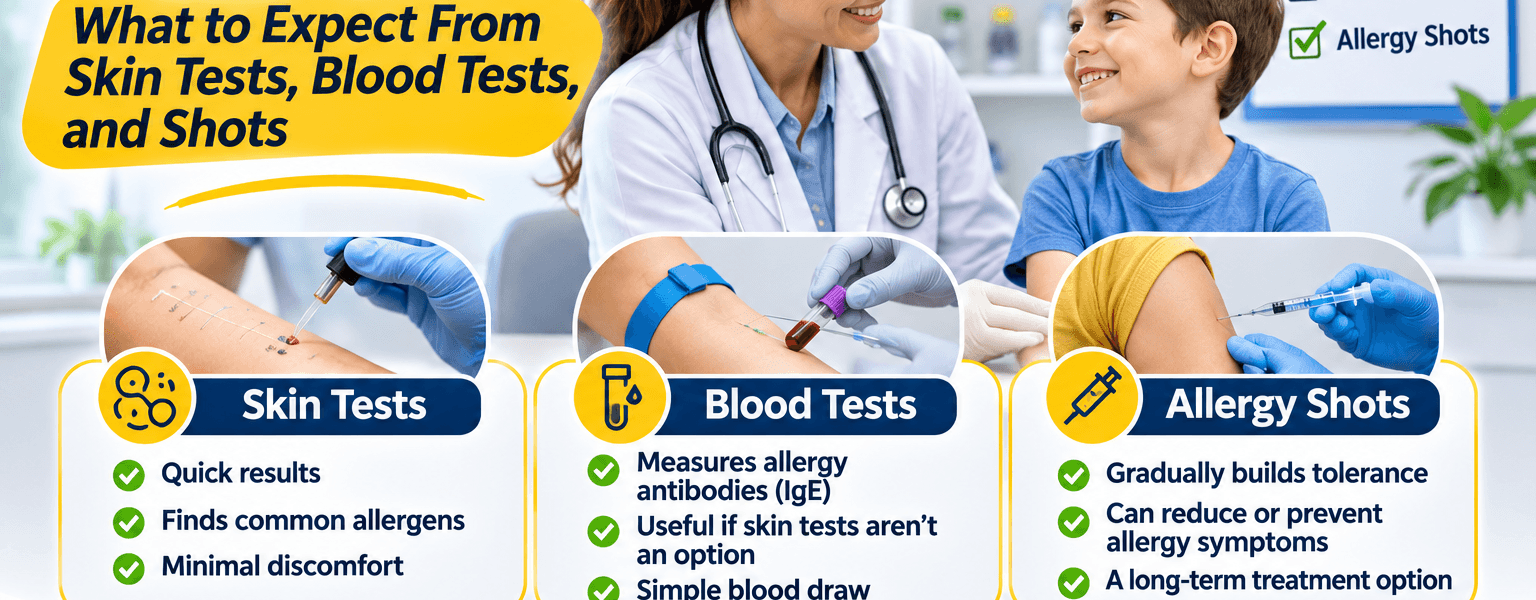
Allergy testing helps identify what triggers symptoms like sneezing, hives, wheezing, or reactions to foods. The two most common methods are skin prick tests, which show results within about 15 to 20 minutes, and blood tests, which measure allergy-related antibodies. Results are interpreted alongside your symptoms and history.
Testing is most useful when guided by an allergist, since positive results do not always mean a true allergy.
Skin Tests and Blood Tests
- Skin prick testing: tiny amounts of allergens are placed on the skin, usually the forearm or back. Raised bumps can indicate sensitivity.
- Intradermal testing: small amounts are injected just under the skin, sometimes used when prick tests are unclear.
- Blood tests: measure IgE antibodies to specific allergens; useful when skin testing is not possible.
- Patch testing: used for contact dermatitis from substances like metals or fragrances.
Some medications, such as antihistamines, can affect skin test results. Follow the clinic’s instructions about stopping medications before testing.
Treatment Options After Testing
Treatment may include avoiding triggers, medications, and immunotherapy. Allergy shots gradually expose the body to increasing doses of allergens to build tolerance over months or years. Some people qualify for under-the-tongue tablets for certain allergens.
For food allergies, allergists may recommend supervised food challenges and emergency plans, including epinephrine auto-injectors. Never test suspected food allergies at home without medical guidance.
Living With Allergies Day to Day
Simple steps can reduce exposure while testing and treatment are underway. Use high-efficiency air filters, wash bedding in hot water weekly, keep windows closed during high pollen days, and check local pollen forecasts. For pet allergies, keeping pets out of bedrooms can help.
Keep a symptom diary noting when and where reactions occur. Patterns in the diary help allergists interpret test results and design treatment plans.
Bring the diary to every appointment so your allergist can compare symptoms with test results and seasons.
When to See an Allergist
Consider an allergist for symptoms that disrupt sleep, work, or school, asthma that is hard to control, reactions to foods, insect stings, or medications, or recurring hives. Seek emergency care for signs of anaphylaxis, such as trouble breathing, throat swelling, or dizziness.
Get A Link’s allergy and asthma clinic listings can help you find board-certified allergists; confirm insurance coverage before booking. Look for board-certified allergists and check insurance coverage before booking.
Test With Guidance, Treat With a Plan
Skin and blood tests help identify allergy triggers, but results need expert interpretation. Follow medication instructions before testing, ask about immunotherapy options, plan carefully for food allergies, and seek emergency care for severe reactions. Get A Link can help you find allergy clinics nearby.
Questions
Do allergy skin tests hurt?
Most people feel only mild discomfort, similar to a light scratch. Positive results can cause itching at the test site for a short time. Clinics usually monitor patients during testing and can treat itching or reactions if needed. Tell staff about any discomfort.
Which is more accurate, skin or blood allergy tests?
Both are useful, and each has strengths. Skin tests give quick results and are often very sensitive, while blood tests work when skin testing is not possible. Allergists interpret either type alongside your symptoms and history. Your allergist will recommend the best option.
How long do allergy shots take to work?
Many people notice improvement during the first year of maintenance treatment, though full benefits may take longer. Treatment often continues for several years. Allergists monitor progress and adjust the plan based on symptoms and response. Consistency improves results. Missing doses can slow progress.
Should I stop antihistamines before allergy testing?
Many antihistamines can interfere with skin test results, so clinics often ask patients to stop them for several days beforehand. Do not stop prescribed medications without guidance. Follow the specific instructions provided by the allergy clinic. Ask before stopping any medication.