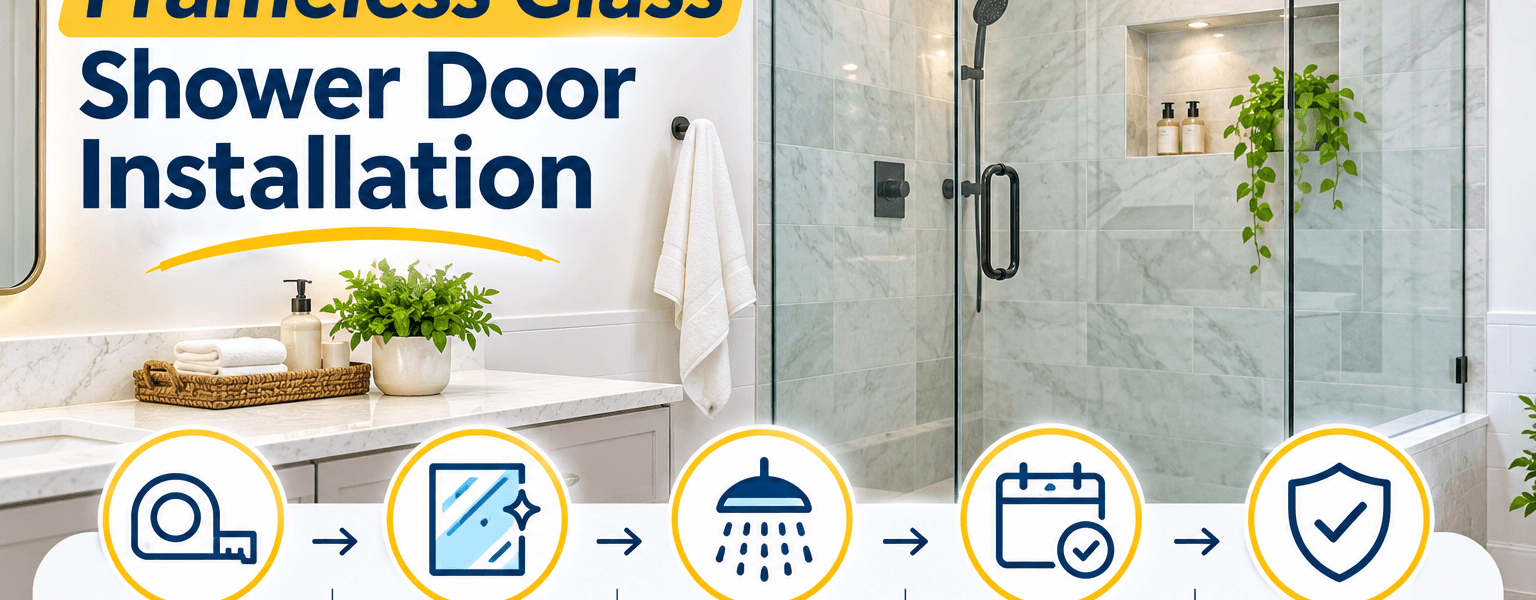
A frameless shower door project starts with a professional measurement after the tile is finished, followed by a choice of glass thickness, hardware, and finish. The glass is custom-cut and tempered, so most shops measure on site rather than relying on homeowner measurements.
Planning ahead avoids delays, leaks, and costly re-orders. Here is how the process usually works from first visit to final install.
Step 1: Finish the Tile First
Glass shops usually measure only after tile and stone work are complete, because walls are rarely perfectly straight. Ask your contractor to plan solid blocking behind the walls where hinges will mount, since heavy glass needs secure anchoring.
Decide whether the shower needs a curb, a sloped floor, or a curbless design. Curbless showers look sleek but require careful drainage planning to keep water inside.
Step 2: Choose Glass and Hardware
- Thickness: heavier glass feels sturdier but needs strong walls and hinges.
- Glass type: clear, low-iron for less green tint, or textured for privacy.
- Coatings: some shops offer protective coatings that make cleaning easier.
- Hardware finish: match faucets and fixtures, such as chrome, brushed nickel, or matte black.
- Door swing: confirm clearance for towels, vanities, and the bathroom door.
Building codes require safety glazing, such as tempered glass, in shower and tub enclosures. Reputable shops use glass that meets these requirements.
What Affects the Price
Pricing depends on glass thickness, size, type, coatings, hardware finish, and the number of panels. Low-iron glass and specialty hardware finishes cost more. Complex layouts, such as neo-angle showers or steam enclosures, also add cost. Ask whether removal of an old door is included.
Request a written quote listing each item so you can compare shops fairly.
Ask about lead times for specialty finishes, which can take longer than standard chrome or brushed nickel hardware.
Step 3: Schedule and Maintain
Custom glass often takes a couple of weeks or more to fabricate after measuring. Ask for a written quote that includes measurement, glass, hardware, installation, and sealing. After installation, follow any waiting period before using the shower so sealant can cure.
Squeegee the glass after showers and use non-abrasive cleaners to prevent spotting. Homeowners can compare local fabricators through Get A Link’s glass and mirror shop listings before booking a measurement.
Measure Right, Install Once
Frameless shower doors require finished tile, solid wall support, the right glass and hardware, and professional measuring. Get a detailed quote, allow time for fabrication, let sealants cure, and clean gently to keep glass clear. Get A Link can help you compare local glass shops.
Questions
Why do glass shops measure after tile is installed?
Tile and stone change wall and floor dimensions, and walls are rarely perfectly straight. Measuring after tile is finished lets the shop cut glass to the exact openings. Because tempered glass cannot be trimmed later, accurate measuring prevents costly re-orders.
Is frameless shower glass safe?
Shower enclosures must use safety glazing, typically tempered glass, which is designed to break into small pieces rather than sharp shards. Proper hinges, wall support, and professional installation also matter. Ask the shop what glass and hardware they use. Hardware quality matters as much as glass.
How long does it take to get a custom shower door?
Many shops need a couple of weeks or more after measuring to fabricate and temper custom glass. Timing varies with glass type, hardware, and demand. Ask for an estimated install date when you approve the quote. Plan the rest of the remodel around it.
How do I keep glass shower doors from spotting?
Squeegee the glass after each shower, ventilate the bathroom, and clean regularly with non-abrasive products. Protective coatings can help water bead off. Hard water may increase spotting, so a water softener can also reduce mineral buildup. Gentle cleaning keeps coatings working longer.